Featured experiment
Wonderlab Campus
A campus full of curiosity. Explore science labs, meet the scientists and step into a walk-through aquarium.
A growing collection of animation, character and game prototypes from the TutorCentrix team. Each one tests how an idea can be shown, moved and understood before it becomes a learning experience.
A campus full of curiosity. Explore science labs, meet the scientists and step into a walk-through aquarium.
Find your next little discovery.
Drive a small glass submarine through ten real seas, from the Mediterranean and the Red Sea to the open ocean and the deep, and meet more than 150 real sea animals.
A one-person glass submarine and a world map of ten seas: the Red Sea, the Mediterranean, the Black Sea, the Sea of Marmara, the Aegean, the Indian Ocean, a Pacific reef, the Atlantic, the open ocean off the Azores and the deep sea. Each sea has its own floor and water and only the animals that really live there, more than 150 species from seahorses and sea turtles to whale sharks, dolphins and sperm whales. Come close to an animal to open its card: its true size, where it lives, what it eats and a surprising fact. All ten seas show realistic sunlight through their own water: light shafts, shimmering patterns on the sand and the bright window of sky seen from below. Fish swim like real ones: schools that turn together, quick bursts and glides, reef fish that stay near their home and bottom fish that rest and then dart away. The small submarine leaves a trail of bubbles from its propellers. Music and sea sounds, a sonar map, and keyboard, mouse and touch controls.
Step into a museum of everyday things. Open a stove, a fridge or a zip and see how it works inside.
A walk-through museum hall in 3D for curious children. Twelve everyday objects stand on display in three sections: a gas stove, a refrigerator, a washing machine, a tap, a zip, a door lock, a padlock, a siphon, a toaster, an air fryer, a water dispenser and an electric shower. Walk up to a display and press E to open it: look at the object from outside, then explore an interactive figure that shows how it works inside, and open it up in section. The museum has its own entrance square with a door you walk through, and it is one of the islands on the Wonderlab island map.
Walk through a two-floor aquarium: tank after tank, a glass tunnel through a giant ocean and the deep sea downstairs.
A walk-through aquarium in 3D. One route winds through a 158 × 155 m building on two floors with 28 tanks: the Turkish seas, the Mediterranean and the Red Sea, coral reefs and a shipwreck, kelp forests, seahorses and jellyfish, and downstairs the deep sea with glowing hydrothermal vents. A glass tunnel with a moving walkway crosses a giant 90 × 60 m ocean tank. An info screen in front of each tank opens its animals, 45 of them with a fact card and a 3D close-up. Children start at the door of the building, walk in, and follow the ceiling signs and floor arrows, with a plan of the building one tap away.
118 elements, a new perspective. Explore atomic structures, changing states and the stories behind them.
A 3D periodic table of all 118 elements for young scientists. Lay it out in the long form, as a spiral or as seven rings. Colour it by kind, raise it into columns for five trends from atomic radius to density, heat it from 0 to 6000 K to see what melts and boils, or play history forward from ancient times to 2016 and watch the table fill in. A seven-part story walks through it, and any element opens a close-up of its atom and a real sample.
One island map, a campus of science labs, an underwater aquarium you explore in a glass submarine and a museum of everyday things. Find your own path to discovery.
Wonderlab opens on an island map. Three islands are open: Wonderlab Campus, the Underwater Aquarium and the How It Works Museum; the others are coming. The campus brings every Wonderlab laboratory together, made to look like a real university: a walled campus with a main gate, a domed hall at its centre, statues, trees and people walking about. Players walk, run, ride a bicycle or take a scooter between sixteen buildings in five districts, then step through a door to open a lab. Ten labs are open now; the other buildings are marked as in development or planned. Players choose a boy or a girl, type a room name and their own name, and everyone in the same room explores the campus together. The Underwater Aquarium is a one-person glass submarine you drive through the open sea, past coral reefs, shipwrecks, dolphins and the deep.
In each open lab, you play as one of them.
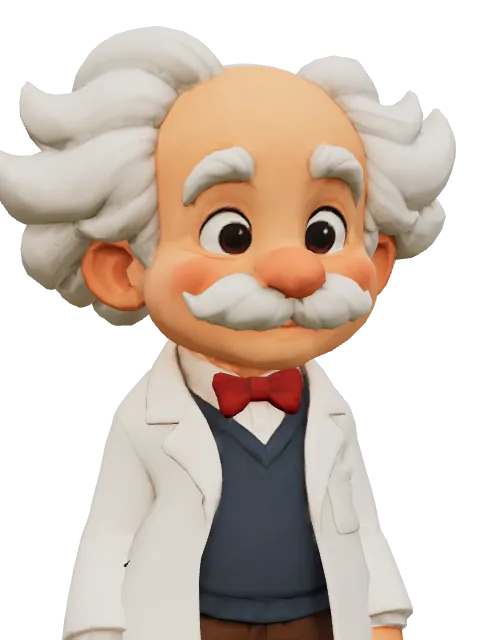
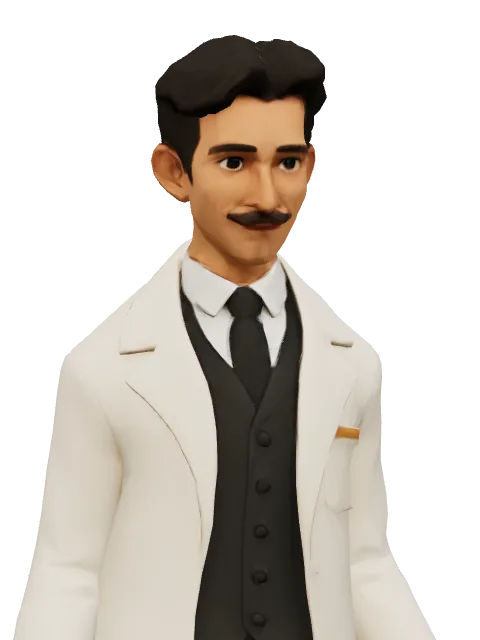
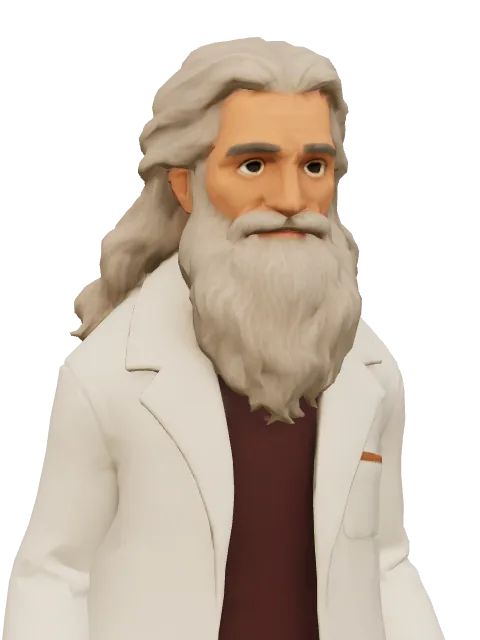
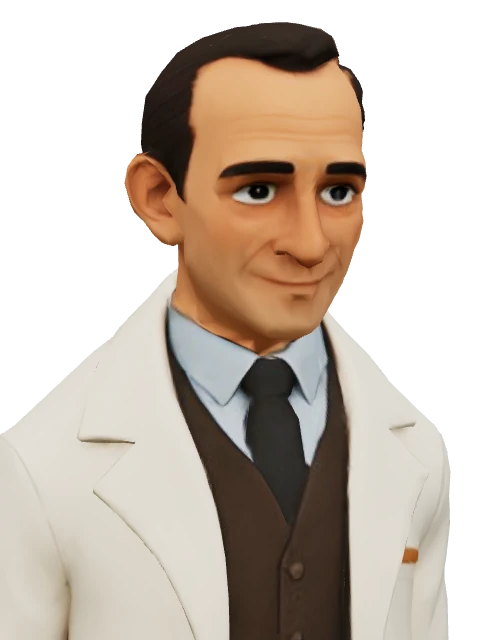
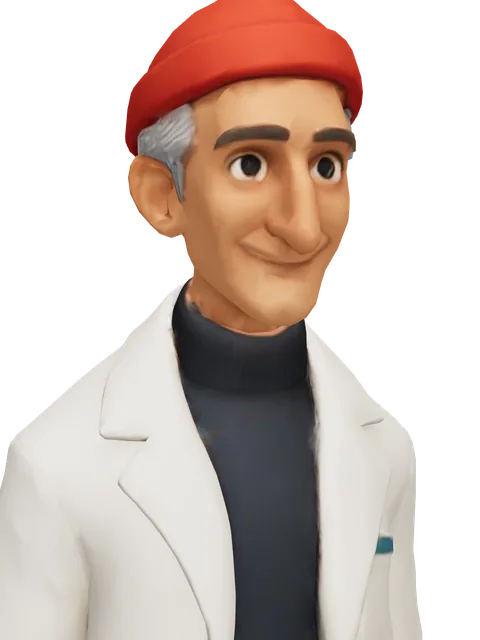
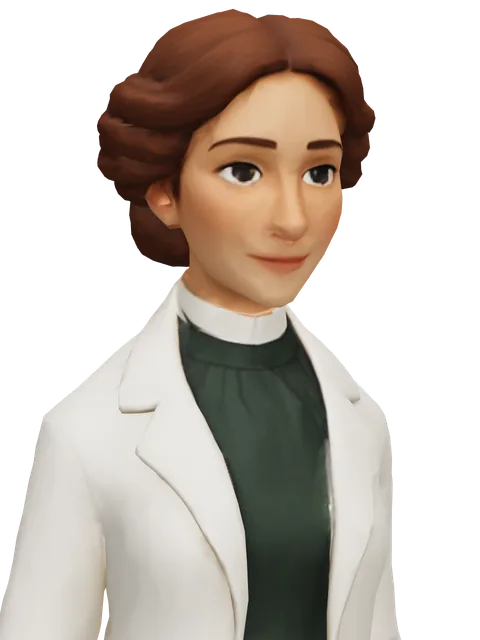


Light a bulb, split a rainbow and test what floats. Explore everyday physics with Albert Einstein.
A playful 3D physics lab for children aged 6 to 14. Players test what floats and what sinks, build a small circuit to light a bulb, split light into a rainbow with a prism and compare the sounds of bottles with different water levels, following predict, act, observe and explain, and record what they saw in a lab notebook. Players walk the lab as their own character while Albert Einstein runs the experiments at the bench.
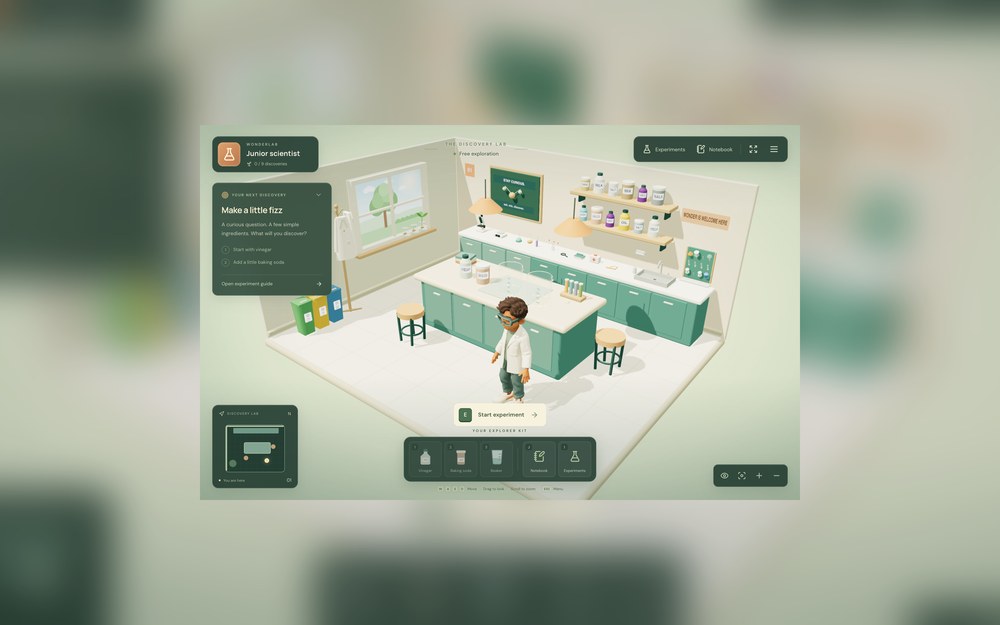
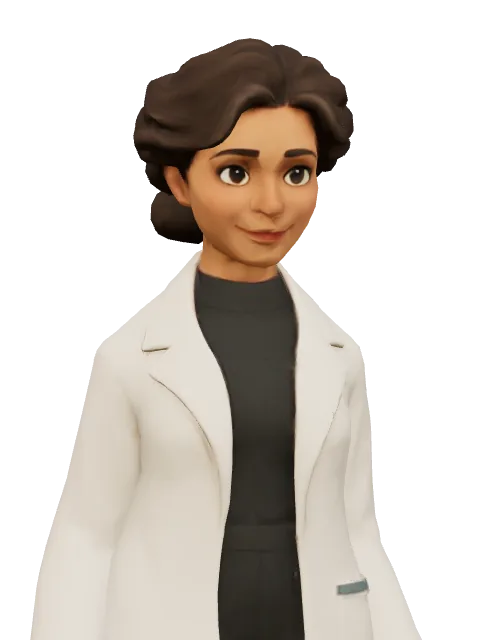
Step into a 3D chemistry lab with Marie Curie. Predict, experiment and see science happen.
A playful 3D chemistry lab for children aged 6 to 14. Players run nine hands-on experiments, from dissolving salt and making a fizz to a red cabbage colour change and a rusting nail, following predict, act, observe and explain, and record what they saw in a lab notebook. Players walk the lab as their own character while Marie Curie runs the experiments at the bench.
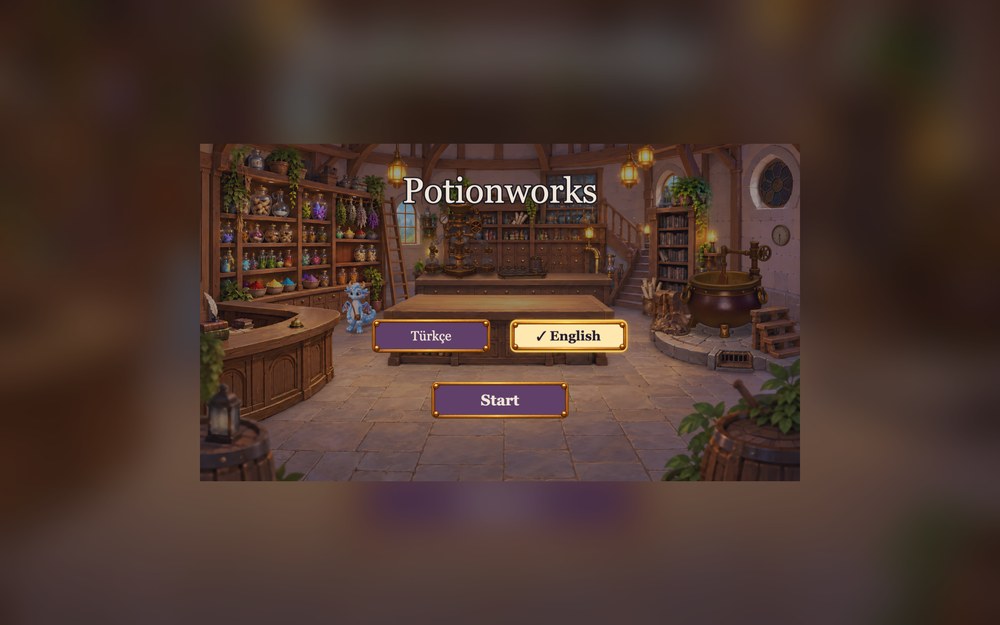
A little maths, a little magic. Mix colourful potions and discover how equivalent fractions work.
A potion workshop game about equivalent fractions. Players fill customer orders by splitting jars into halves, quarters and eighths and pouring the parts together, and learn that different-looking amounts like 2/4 and 1/2 make the same potion.
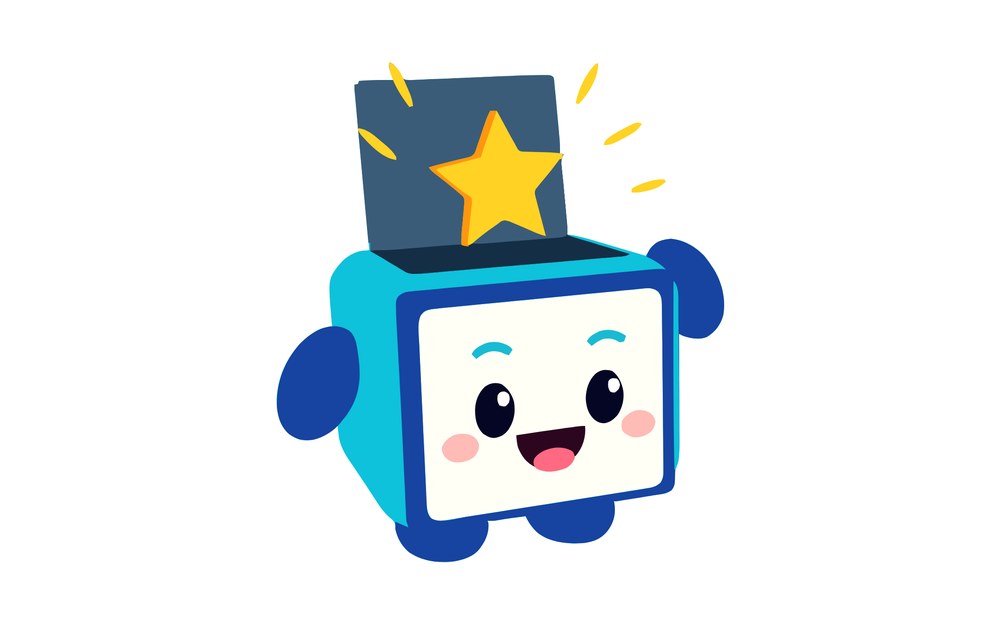
Small character, plenty of expression. Explore lightweight vector animations and download your favourites.
Kubi in flat colour, as Lottie animations that play in any browser without a 3D engine. Each clip is drawn as lightweight vector shapes and can be downloaded as Lottie JSON or dotLottie for use in apps and web pages.
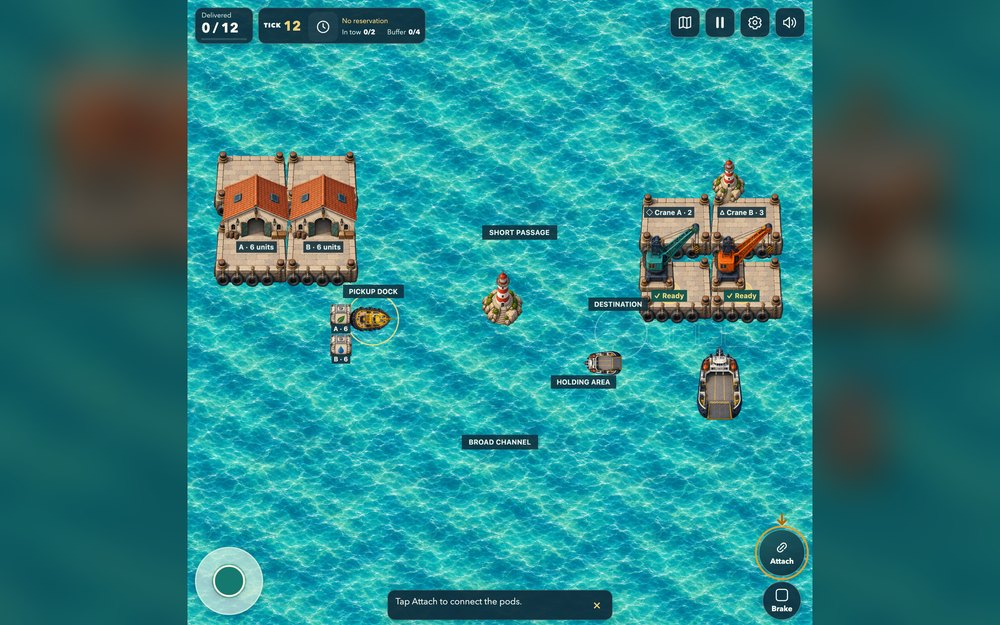
Pack cargo and sync the cranes. Discover common divisors and multiples through a working harbour.
A harbour game for grade 8 maths. Players pack two cargo stocks into equal pods with nothing left over, which leads them to the greatest common divisor, and time two cranes with different cycles to find when both are first ready together, the least common multiple. The concepts are named only after players have seen the pattern in their own attempts.
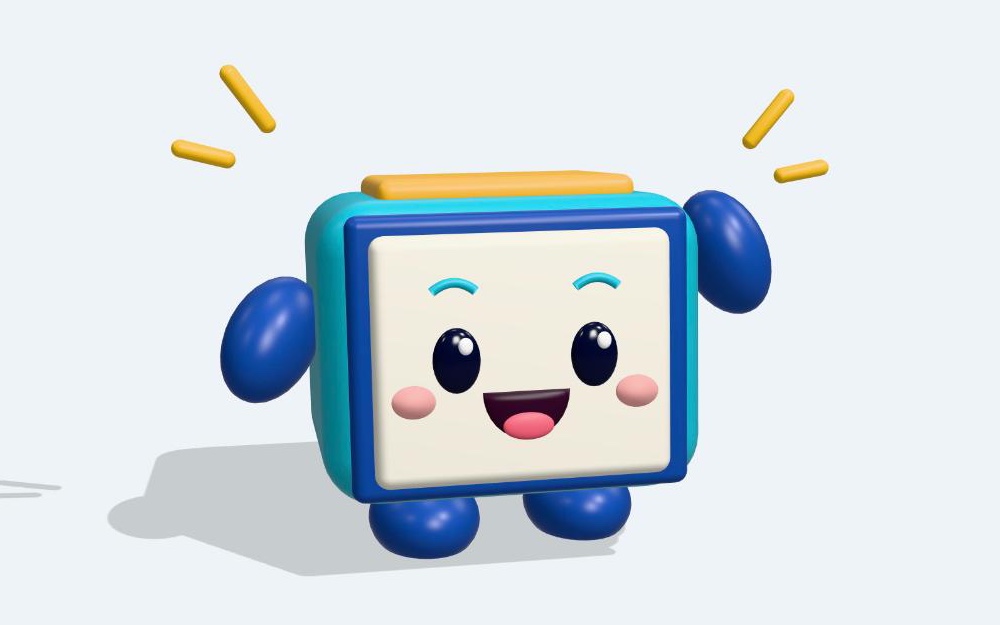
A curious cube companion brought to life through expressive poses, playful motions and interactive 3D.
Kubi is a curious cube companion who thinks, finds clues and celebrates. This experiment tests how a character can show a thought process on screen: all seven motions from the character sheet, including a whiteboard, a number line and a shape tool, five facial expressions, plus walking and breathing loops. Orbit the model, pause any motion, and compare it with its reference frame.
The characters bringing each Wonderlab laboratory to life.
Chemistry Lab
Physics Lab
Materials Lab
Energy Lab
Structures and Machines Lab
Earth Lab
Ocean Lab
Climate Lab
Human Body Lab
Math Lab